






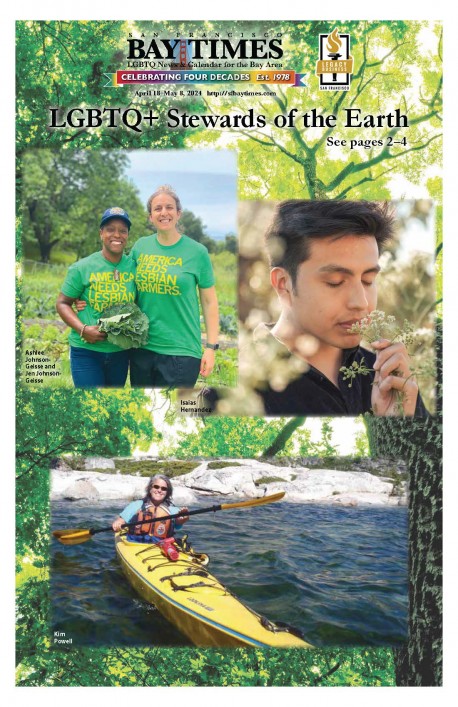
At Brown Girl Farms, Earth Day Is Every Day
Birthed from a belief that queer, Black women farmers need more representation and celebration in the growing world, Ashlee Johnson-Geisse founded Brown Girl Farms. Brown Girl Farms, located in the Hayward hills, is a small-scale family farm grounded in community. Ashlee and her wife Jen Johnson-Geisse live…
The Stud Collective Transforms Historic Queer Bar Into America’s First Co-Op Nightclub
The Stud’s new chapter began eight years ago when it was announced, on August 4, 2016, that a group consisting of drag queens, DJs, and performers formed a co-op and secured funding to purchase the historic queer bar. It will soon be transformed into the country’s first…
Liam Mayclem: ‘Chef Dominique Crenn Is a Rebel With a Cause’
“Girl on Fire” by Alicia Keys describes the year four-Michelin-starred Chef Dominique Crenn is having. She now divides her time between France, where her recently opened restaurant Golden Poppy Paris is, and Northern California, the home of her restaurants Atelier Crenn (recipient of 3 Michelin stars), Petit…
A Thriving Gayborhood in the Heart of Oakland
Polls and surveys consistently show that Oakland, California, has one of the highest concentrations of LGBTQ people in the nation. It also has one of the largest populations of lesbian-headed households, and is among the most integrated cities in the U.S. The White Horse Bar, which has…
Skin on Market: A Beacon of Inclusivity and Community Support in the Castro
Photos by David Michael By Leon Shannon– My journey with skincare has been marked by struggles, triumphs, and a profound commitment to empowering others on their own unique paths to healthy, radiant skin. Originating from Michigan and raised in the vibrant East Bay, I had an initial…
GLIDE Ensemble and Sarah Bush Dance Perform at ‘A Night to Empower the Legacies of Del Martin & Phyllis Lyon’
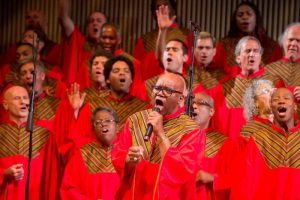
Women’s History Month wrapped up with “A Night to Empower the Legacies of Del Martin and Phyllis Lyon” as part of the Divas & Drinks @ The Academy event series co-produced by the San Francisco Bay Times and The Academy SF. It included a first look at…
 Features
Say Cheese!

By Laura Werlin (@cheezelady)– As the “cheezelady” (read: someone who speaks and writes on the subject), I must confess I kind…
Castro Farmers’ Market Season Opening 2024

Photos by Rink The annual Season Opening Ceremony of the Castro Farmers’ Market was held on Wednesday, April 3, 2024, on…
Michael Boland’s Visionary Leadership Has Improved Multiple San Francisco Parks and Trails

In his over three decades of leadership, first as Director of Park Projects for the Golden Gate National Parks Conservancy and…




















Recent Comments